
A funding offer can look attractive until you see what sits behind it. The difference between secured and unsecured business loans is not simply whether a lender asks for security. It affects the amount you may be able to borrow, the cost of finance, the application process and what is at risk if your business cannot keep up with repayments.
For a director, the right choice depends on the purpose of the funding and the strength of the business behind the application. A short-term cash-flow requirement may call for a very different facility from a property purchase, equipment investment or acquisition.
What is a secured business loan?
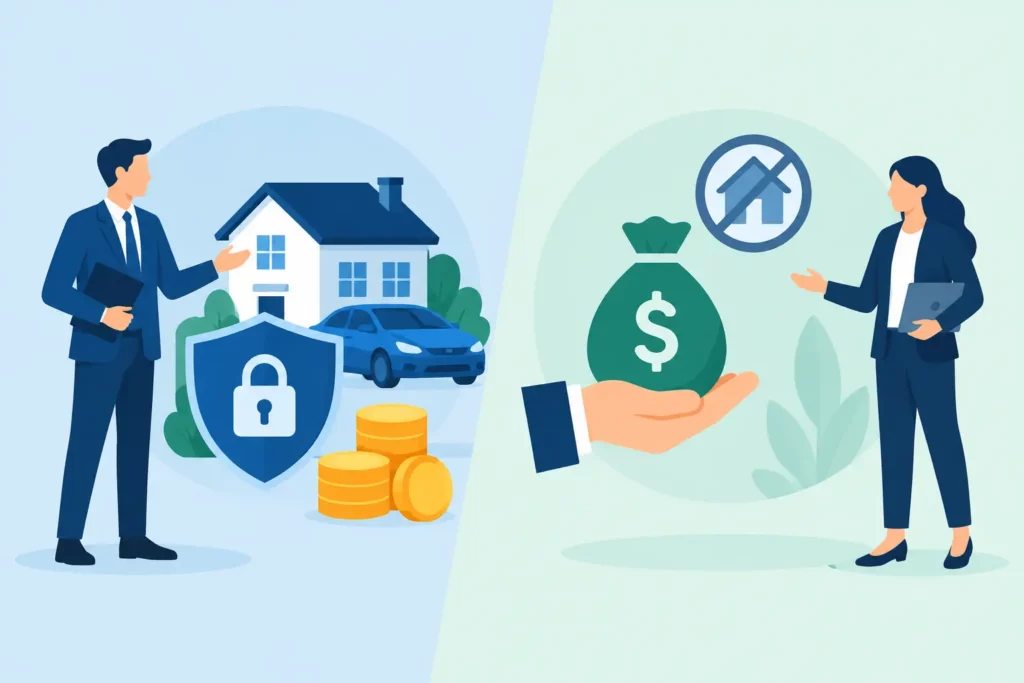
A secured business loan is backed by an asset that a lender can use as security. If the borrower defaults and the situation cannot be resolved, the lender may be entitled to take and sell that asset to recover the outstanding debt.
Security can take several forms. It may be commercial property, plant and machinery, vehicles, stock, invoices or other business assets. In some cases, a lender may also ask for a personal guarantee from a director, particularly where the business has a short trading history or limited balance-sheet strength.
Because the lender has a clearer route to recovery, secured borrowing can support larger facilities, longer repayment terms and, in many cases, lower interest rates than an unsecured alternative. This does not automatically make it the best option. The security needs to be proportionate to the benefit of the funding.
When secured borrowing can make sense
Secured finance is often suitable when the funding has a long-term purpose or is linked to an identifiable asset. A manufacturer buying machinery, for example, may use asset finance so the equipment itself supports the facility. A business purchasing or refinancing premises may use commercial mortgage or bridging finance secured against the property.
It can also be useful for established businesses seeking substantial capital. Where a company needs to fund an acquisition, invest in a major project or release capital tied up in property, security may enable a lender to offer more favourable terms than would otherwise be available.
The key question is whether the asset being secured is one the business can reasonably put at risk. Directors should understand the lender’s security documents, including whether a debenture or fixed and floating charge could affect other assets and future borrowing flexibility.
What is an unsecured business loan?
An unsecured business loan does not require a specific business asset to be charged as security. The lender makes its decision mainly on the company’s affordability, trading performance, turnover, credit profile and ability to service the repayments.
That can make unsecured borrowing an appealing route for businesses that do not own property or valuable equipment, or for directors who want to avoid tying up key assets. It is commonly used for working capital, stock purchases, marketing activity, recruitment, smaller expansion plans and short-term operational needs.
Unsecured does not mean risk-free for the borrower. Many lenders may still require a personal guarantee, which can make directors personally liable for some or all of the debt if the company cannot repay it. Terms vary considerably, so this should never be assumed either way. Ask whether a personal guarantee is required, what amount it covers and whether it reduces as the balance is repaid.
The trade-off for greater flexibility
Without asset security, lenders take on more risk. As a result, unsecured loans can carry higher rates, shorter terms or tighter affordability criteria. The available amount may also be lower than with secured finance, particularly for younger businesses or those with inconsistent profitability.
That said, speed and simplicity can be valuable. Some unsecured facilities can be arranged more quickly than property-backed borrowing because there is no asset valuation or legal charge to complete. For a time-sensitive stock opportunity or a temporary cash-flow gap, that difference may matter more than securing the lowest possible rate.
Secured vs unsecured business loans: the practical differences
The most useful way to compare the two is to look beyond the label. Cost, risk, speed and borrowing capacity all need to be weighed against the reason for borrowing.
Security and personal exposure
With a secured loan, a named business asset is at risk if the loan is not repaid. This may be a necessary and sensible commercial decision, but it deserves careful consideration. Losing a core trading asset could disrupt operations at exactly the point the business is under financial pressure.
With an unsecured loan, no specific asset is usually charged. However, a personal guarantee can still create exposure for directors. A guarantee should be reviewed with the same care as any formal security, rather than treated as a routine part of the paperwork.
Loan size and repayment term
Secured facilities can generally support higher borrowing amounts because the lender has collateral. They may also be repaid over a longer period, helping to align monthly repayments with the useful life of the asset or project being funded.
Unsecured loans tend to be smaller and shorter, though there are exceptions for well-established businesses with strong financials. They can be a better fit where the funding need is modest and the business expects to repay it quickly from trading cash flow.
Pricing and total cost
A secured loan may offer a lower headline interest rate, but the total cost can include valuation fees, legal fees, arrangement fees and the time involved in putting security in place. A cheaper rate is not always a cheaper facility once all costs and the repayment profile are considered.
Unsecured finance can be more expensive on paper, yet still be commercially sensible if it can be completed quickly, avoids property security or prevents the business from disrupting a more valuable long-term facility. Comparing annual cost, fees, early repayment provisions and monthly affordability gives a clearer picture than comparing rates alone.
Speed of access
Unsecured lending can often move faster, especially where management accounts, bank statements and trading data clearly support the application. Secured lending may take longer due to valuations, legal work, lender due diligence and registration of charges.
There are exceptions. Asset-backed facilities can be efficient where the asset is straightforward and the lender specialises in that type of transaction. Conversely, an unsecured application can stall if affordability is unclear or the business has a challenging credit history.
Which type of business loan is right for you?
Start with the purpose of the funds. Borrowing to buy an asset with a long working life may justify a secured facility with a longer repayment period. Using a long-term secured loan to cover a short-lived cash-flow gap may be less suitable, even if the rate appears attractive.
Next, assess repayment capacity under realistic conditions. Consider what happens if sales are delayed, a major customer pays late or margins tighten. The facility should leave enough working capital for the business to trade, not simply meet the lender’s minimum affordability calculation.
It is also worth considering how the facility affects future plans. Giving a lender a wide-ranging charge over company assets could limit flexibility when you later need invoice finance, asset finance or another growth facility. Equally, preserving assets at all costs can mean paying more than necessary for unsecured finance.
A lender may view the same business differently depending on its sector, trading history, customer concentration and the asset being offered. This is why a single decline or an offer from an existing bank should not be treated as the whole market.
Questions to ask before accepting an offer
Before proceeding, make sure you can answer four practical questions: what exactly is being secured, whether any director is giving a personal guarantee, what the monthly repayment will be and what the total cost will be if the facility runs to term.
Also ask about early settlement charges, covenants, renewal requirements and what information the lender expects during the term. A facility that works today should not create avoidable pressure six months from now.
The strongest funding structure is usually the one that matches the purpose, repayment profile and risk appetite of the business. If the choice is not clear, an experienced adviser can help test secured and unsecured options across the market, explain the obligations in plain English and keep the process focused on a funding solution your business can carry with confidence.